


House in a gated community in Cacupé.
R$ 2,890,000


In 1984, Amyr Klink set off alone from the African coast in a small rowboat to undertake a crossing that no one had completed in that way. One hundred days later, he reached the coast of Bahia and entered the history of seafaring. Now, more than four decades later, that journey arrives in cinemas in 100 Dias, a film directed by Carlos Saldanha, with its premiere scheduled for October 29, 2026.
Played by Filipe Bragança, the Brazilian navigator receives a cinematic version that follows both the challenges of the Atlantic and the personal conflicts of a determined man pursuing a project considered improbable.
The story has all the elements of a great adventure: isolation, storms, an entire ocean ahead and a vessel built to withstand the crossing. However, its most extraordinary aspect may lie in the years before the departure. Before rowing thousands of kilometers, Amyr had to turn a bold idea into a feasible plan.
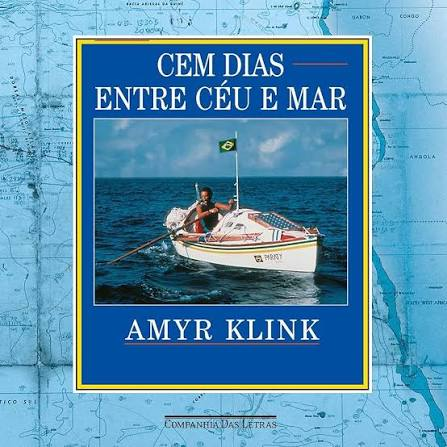
Inspired by the book Cem Dias Entre Céu e Mar, the feature also marks a meeting between two internationally recognized Brazilians: one for his ability to explore the oceans, the other for creating worlds in cinema.
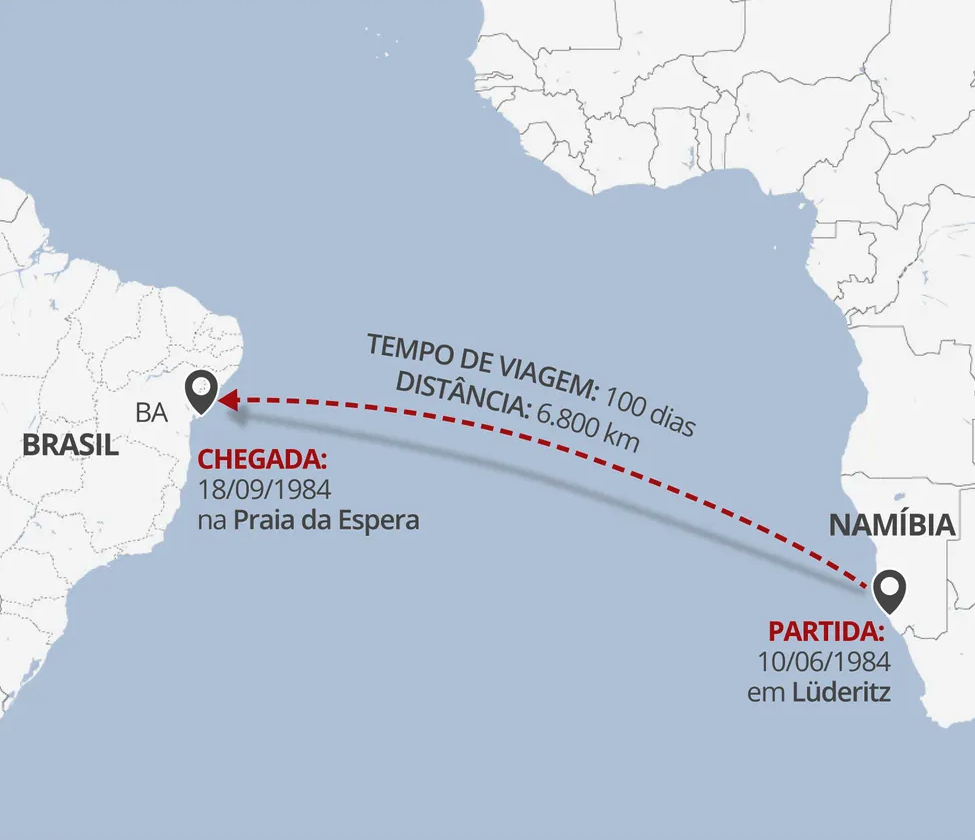
100 Dias follows the expedition carried out by Amyr Klink in 1984, when the navigator rowed across the South Atlantic, departing from Namibia toward Brazil.
The film is directed by Carlos Saldanha, a Brazilian filmmaker known for works such as A Era do Gelo It is Rio. This time, he takes on an adventure narrative based on real events, with the ocean as the central setting.
Filipe Bragança plays Amyr in his youth. The cast also includes Philippine Leroy-Beaulieu, Felipe Camargo, Gero Camilo, Martha Nowill and Duda Mamberti.
The production adapts the book Cem Dias Entre Céu e Mar, published after the expedition and became one of the best-known works of Brazilian travel literature.
Beyond the physical journey, the screenplay explores Amyr's relationship with his family, especially his conflicts with his father, and the process of maturing that accompanies the decision to cross the ocean.
The film had its world premiere at the Rio Film Festival on October 10, 2026, during the Brazilian closing gala of the event. The commercial release in Brazilian cinemas is scheduled for October 29.
Amyr Klink was 28 years old when he began the expedition that would change his life.
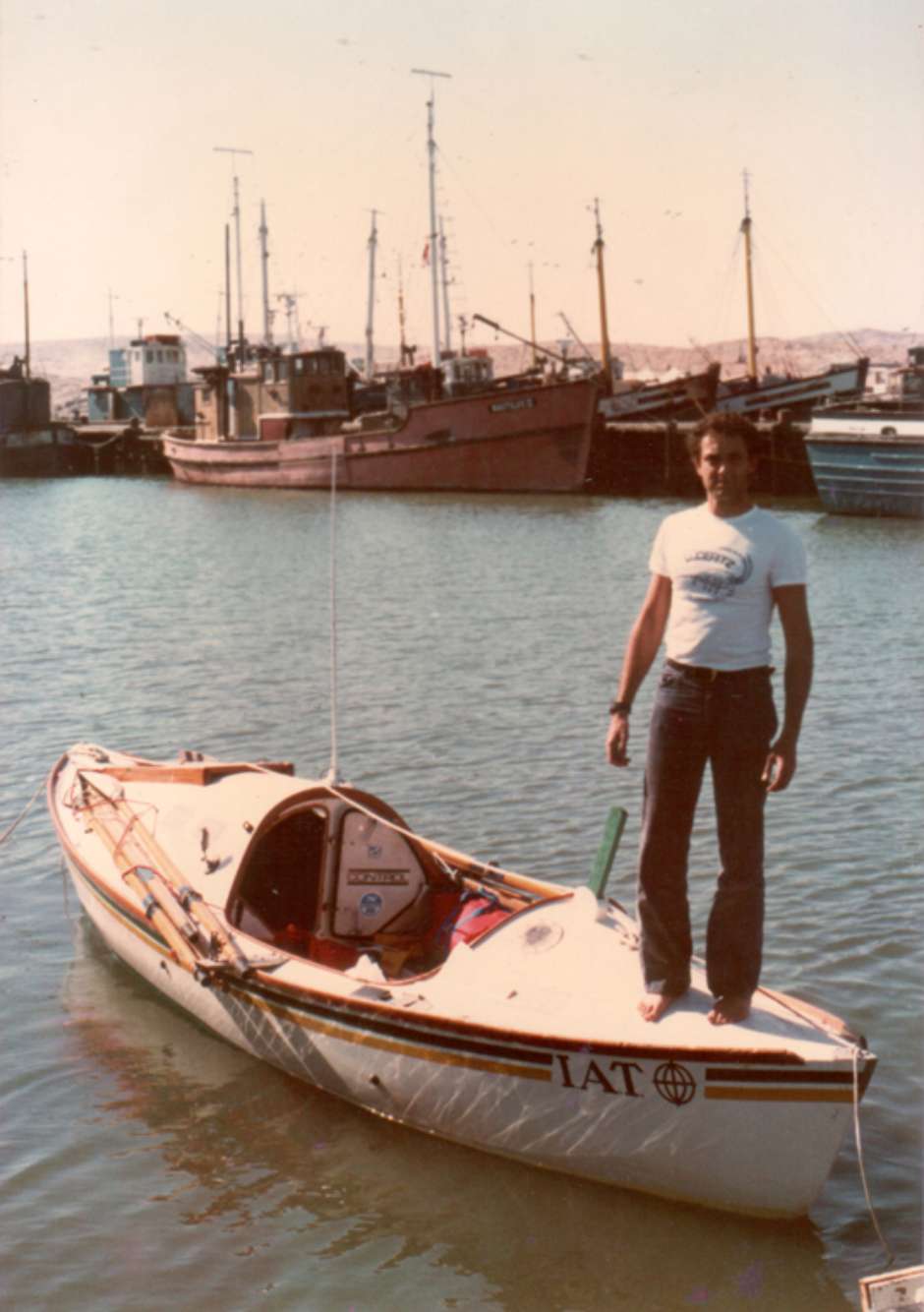
In June 1984, he left Lüderitz, Namibia, in a vessel specially designed to row across the South Atlantic. The destination was the Brazilian coast, thousands of kilometers away.
At that time, the navigator did not have the resources common in today's ocean expeditions. There was no GPS, satellite communication or instant access to updated weather forecasts.
For this reason, preparation required a deep understanding of ocean currents, winds and the conditions he would encounter along the way.
The boat had to combine characteristics that were difficult to reconcile: strength to withstand the ocean, space to carry provisions and dimensions that would allow a single man to propel it with oars.
During the crossing, Amyr faced isolation and the physical demands of maintaining a routine at sea. In addition, he had to manage the available resources and make decisions without a crew.
On September 18, 1984, he arrived at Praia da Espera, in Bahia, completing a journey of approximately 3,700 nautical miles, equivalent to nearly 6,000 kilometers.
This feat made him the first person to cross the South Atlantic alone in a rowboat.
The arrival also marked the beginning of another journey. The records of the expedition gave rise to Cem Dias Entre Céu e Mar, a book that would bring his story to readers far beyond the nautical world.
The image of a man alone in the middle of the ocean tends to inspire immediate admiration. But Amyr Klink's journey takes on another dimension when we look at the work required to make the voyage possible.
It took about two years of study and preparation.
During this period, the navigator researched routes, studied the conditions of the Atlantic, and followed accounts of earlier expeditions. He also took part in the development of the vessel, evaluated the necessary equipment, and sought solutions to the communication challenges.
Amyr even left his job at a bank in São Paulo to dedicate himself to making the project viable.
The decision involved financial and personal risks. After all, the success of the crossing depended on a long sequence of choices made while still on land.
During a meeting at Rio2C in May 2026, the navigator emphasized that his interest lay in the experience of conceiving a challenging project and carrying it out.
This aspect helps explain why his story remains relevant. The expedition was born of curiosity, research, and discipline, long before it gained the dimension of a world record.
In cinema, the crossing concentrates the action. In real life, however, the one hundred days on the Atlantic were the result of years of work.
Bringing this story to the big screen required solutions of its own.
In an animated film, Carlos Saldanha can build entire settings digitally. In 100 Diasthe challenge was to recreate a real environment whose power depends precisely on its unpredictability: the Atlantic.
The production relied on international collaboration, including professionals and companies from Finland specializing in visual effects, sound design, and post-production.
The work involved creating storms, maritime phenomena, and scenes with animals on the open sea.
Among the sequences developed with digital resources is an encounter with whales, produced with the participation of a Finnish team.
Therefore, the goal was to preserve the sense of scale and vulnerability of a lone man in a small vessel, surrounded by water in every direction.
In addition, the narrative had to translate to the screen an experience marked by long periods of solitude and repetition. The actual crossing lasted one hundred days, but the film must convey the passage of time and the character's transformation within a dramatic structure of its own.
Amyr followed the development of the adaptation and gave the filmmakers creative freedom.
Thus, this choice allowed the feature film to explore conflicts and emotions without being confined to a literal reproduction of the events recorded in the book.
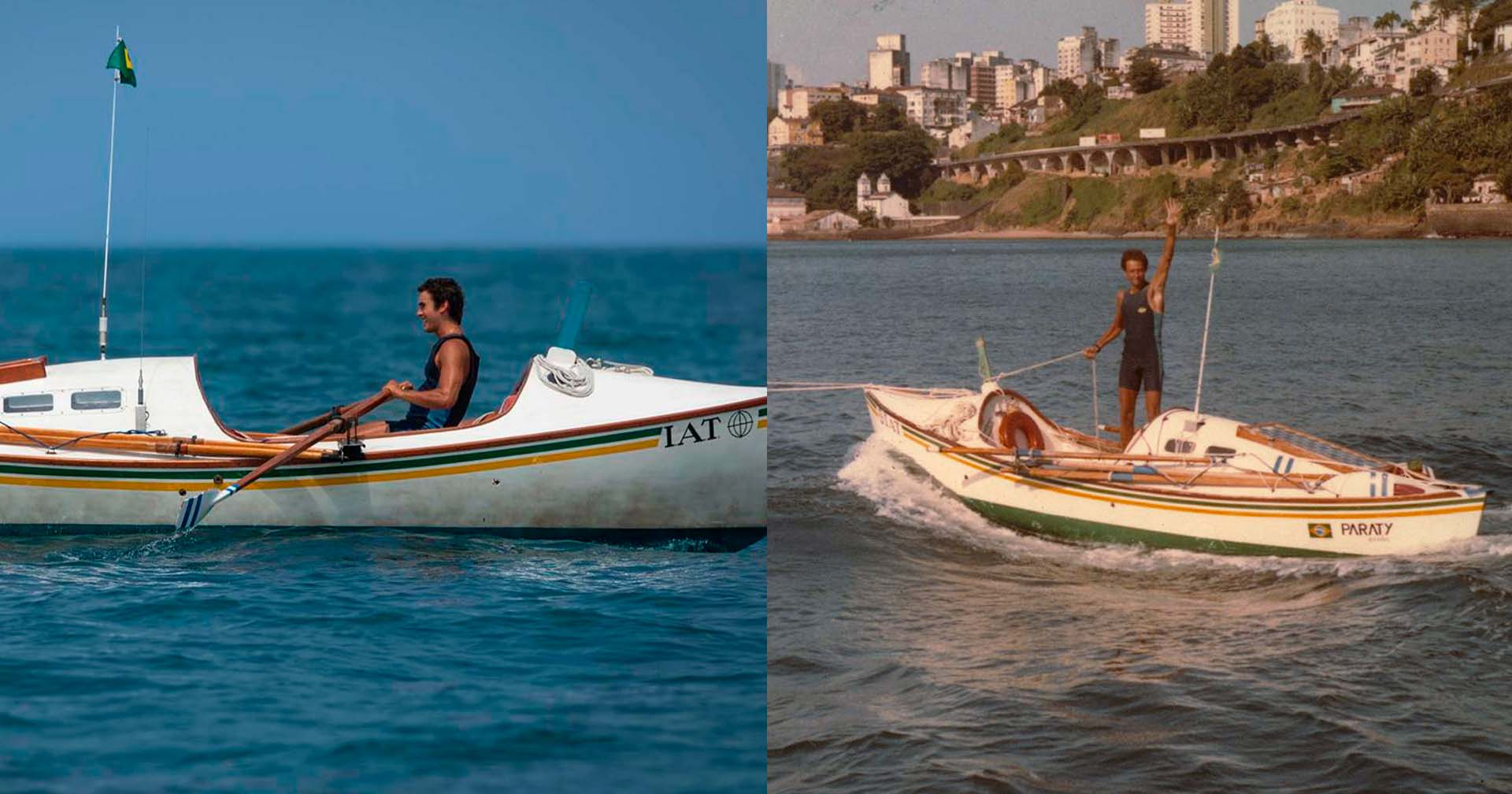
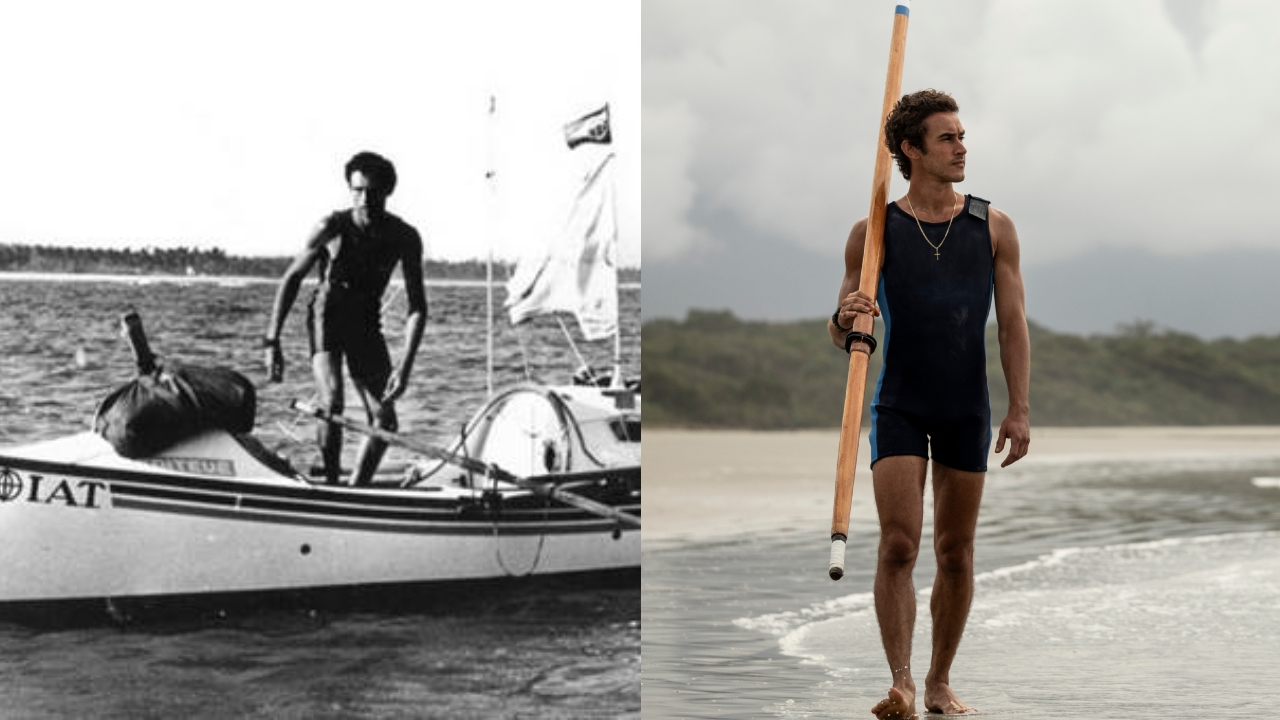
Playing a navigator on a solo expedition requires a particular kind of preparation.
Much of the story unfolds with only one person on screen, in an environment that is constantly changing. The actor must convey fatigue, concentration, fear, and determination with few lines and limited resources.
To portray Amyr Klink, Filipe Bragança underwent physical and technical training. Among the skills he studied was celestial navigation with a sextant, an instrument used to determine positions by observing the stars.
In addition, the actor also lost about 11 kilograms during preparation. These details help illustrate the demands of the role. The film follows a man subjected to a prolonged ordeal, under conditions that affect both the body and the perception of time.
The characterization, therefore, had to keep pace with the transformations of the voyage.
Bragança's performance is one of the central elements of the production, especially because the story depends on his ability to hold the audience's attention during the protagonist's moments of isolation.
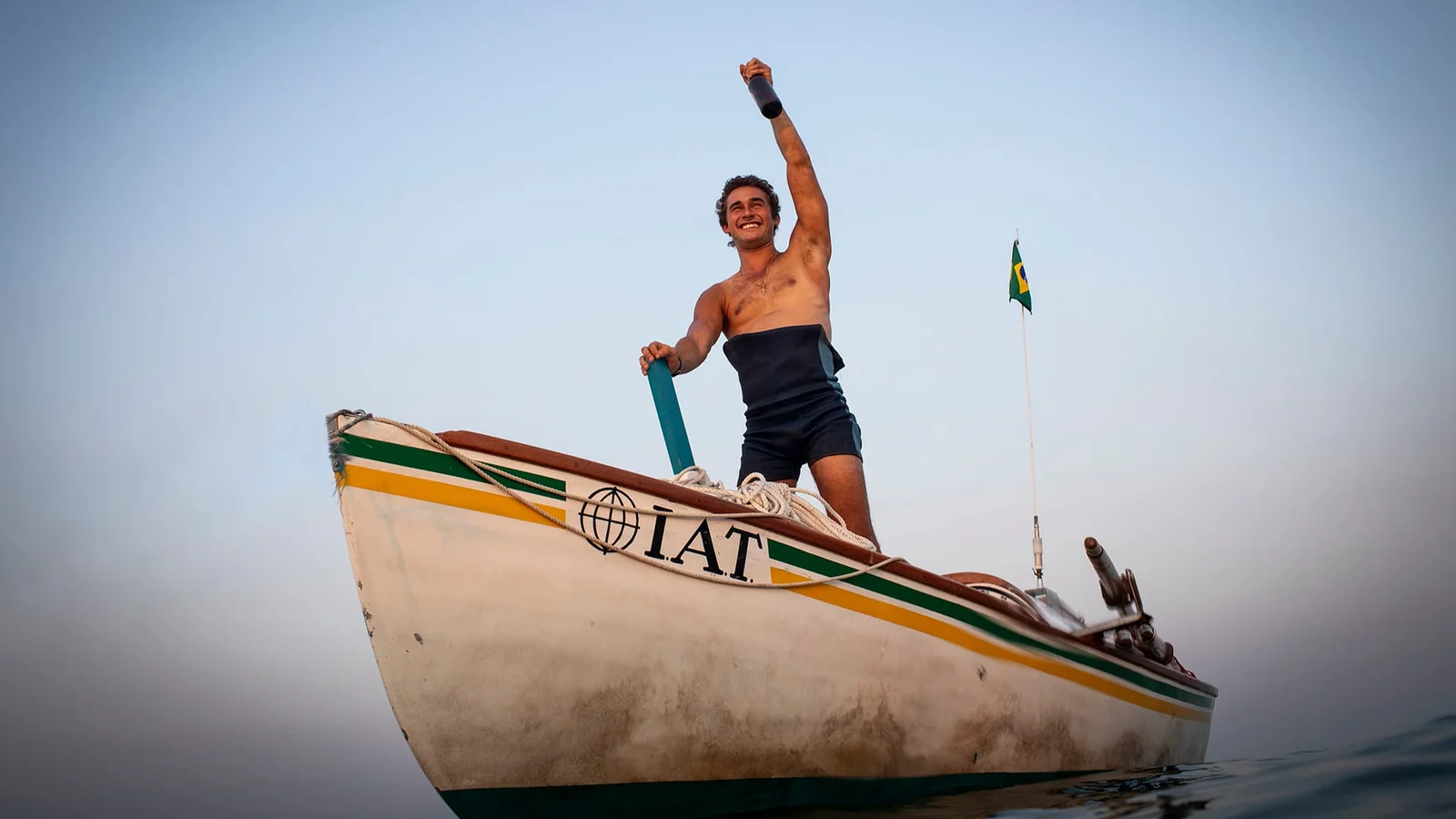
Published after the crossing, Cem Dias Entre Céu e Mar solidified Amyr Klink as a writer and made the expedition accessible to people who had never set foot on a sailboat.
The book gathers observations on navigation, life aboard, the challenges of the voyage, and the thoughts that accompanied the author during the months at sea.
In an interview with Veja, in September 2026, Amyr said he insisted on writing the text himself, preserving his own way of telling the experience.
The result was a publishing success that has spanned generations.
The idea of adapting the work for the screen came from Marina Klink, the navigator's wife, who wanted to see the story turned into a film.
The project took years to materialize, until it found in Carlos Saldanha a director interested both in the dimension of the adventure and in the human journey of its protagonist.
In other words, this adaptation also brings together two ways of telling the same experience.
In the book, the reader follows the events from the perspective of someone who was aboard the boat. On the other hand, in the film, the narrative gains imagery, performances, and a dramatic construction capable of introducing the expedition to a new audience.
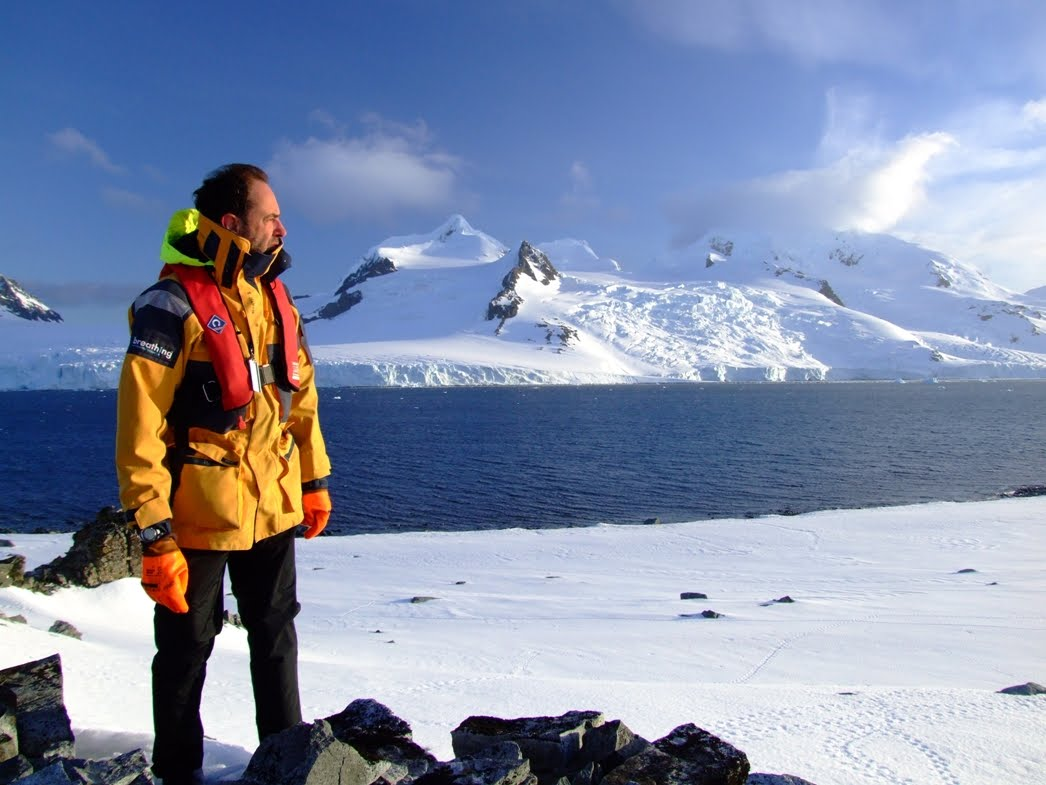
The 1984 crossing was only the beginning of an extraordinary career at sea.
In the following years, Amyr Klink undertook voyages on sailboats, expeditions to Antarctica, and solo circumnavigations of the globe. As a result, his name came to represent a Brazilian tradition of maritime exploration marked by rigorous planning and the development of vessels adapted to extreme conditions.
In addition, the experience has also been turned into books, lectures, and projects related to sailing.
Today, Amyr remains connected to the nautical world and helps manage a marina in Paraty, in Rio de Janeiro.
The relationship with the sea also passed to the next generation. His daughter Tamara Klink built a path of her own as a navigator, carrying out expeditions and developing her projects independently.
In an interview with BBC News Brasil in October 2026, Amyr explained that he sought to encourage this independence, avoiding having his daughter simply repeat his path.
O interesse pela navegação, portanto, continua presente na família, agora acompanhado de novas tecnologias, rotas e perspectivas.

Amyr Klink's experience belongs to the world of great expeditions, far removed from the routine of most people. Even so, his story sparks an interest familiar to anyone who loves to sail: the desire to know the water from one's own perspective.
Some find this pleasure in ocean crossings. Others prefer a weekend sail, a morning on the lagoon, or a few hours following the coastline.
In Florianópolis, the geography encourages this connection. Lagoa da Conceição brings together watersports enthusiasts, while Baía Norte and the Jurerê region integrate the maritime landscape into the everyday life of different neighborhoods.
The city also has a sailing tradition represented by yacht clubs and nautical schools, such as the Iate Clube de Santa Catarina, known as Veleiros da Ilha.
For those who cultivate this passion, living near the water means shortening the distance between the desire to sail and the opportunity to do so. Choosing an address close to yacht clubs, marinas, and launch points can transform how often the boat gets out on the water.
In areas such as Jurerê, Lagoa da Conceição, and Cacupé, the relationship with the sea takes on different forms. At some addresses, the appeal lies in proximity to nautical infrastructure. At others, it lies in views of the boats and the constant presence of the coastal landscape.
This is a dimension of living that goes beyond architecture. After all, location also determines which experiences fit into everyday life.
R$ 2,890,000

R$ 4,250,000

R$ 2,370,000

R$ 7.786.268

R$ 2,363,000

R$ 4,950,000

R$ 2,990,000

R$ 2,200,000

R$ 4,108,000

R$ 9,600,000
100 Days revisits one of the most singular episodes in Brazilian seafaring and presents it with the visual scale of cinema.
The story brings together the ambition of a young sailor, the meticulous preparation of an expedition, and the confrontation with an environment over which no one has absolute control.
In addition, the film offers the chance to meet Amyr Klink before he became an international reference, when his crossing was still a project surrounded by doubts and difficulties.
The direction of Carlos Saldanha and the performance of Filipe Bragança bring this journey closer to a new generation of viewers.
More than forty years after arriving in Bahia, the expedition remains impressive. A small boat, one hundred days at sea, and the determination to carry out an idea that seemed far from reality.
100 Days opens in Brazilian theaters on October 29, 2026. For anyone who appreciates stories of adventure, navigation, and extraordinary choices, it is a date with one of the most remarkable journeys in Brazil.
Count on our brokers and our specialized real estate advisors to find the perfect property and guarantee your peaceful living in [location]. Florianópolis. Our team operates with the concept of a Boutique of Service, offering a highly personalized and bilingual experience.
We are executives who are knowledgeable not only about the characteristics of the properties, but also about the different lifestyles and particularities of each region of Florianópolis Island. For those arriving in the city and wishing to visualize what it would be like to live here, our selection goes beyond location and square footage.
We select properties that perfectly fit your current life stage, considering aspects such as your routine with children, suggestions for schools, sports, businesses, special activities, and the dynamics of each neighborhood — always with a sensitive eye to your needs and preferences. In other words, from the search to the negotiation, we are by your side every step of the way.
With our experience and extensive knowledge of the region, we will find the ideal place for you to live and invest. We are located in Jurerê Internacional, at Professor Heinz Braunsperger Street, 88 – Store 3. Schedule your visit.

♠ +55 48 99660 6799
♠ dayrocco@luxuryhomefloripa.com.br
♠ Follow on Instagram
♠ Check out our Real Estate Portfolio
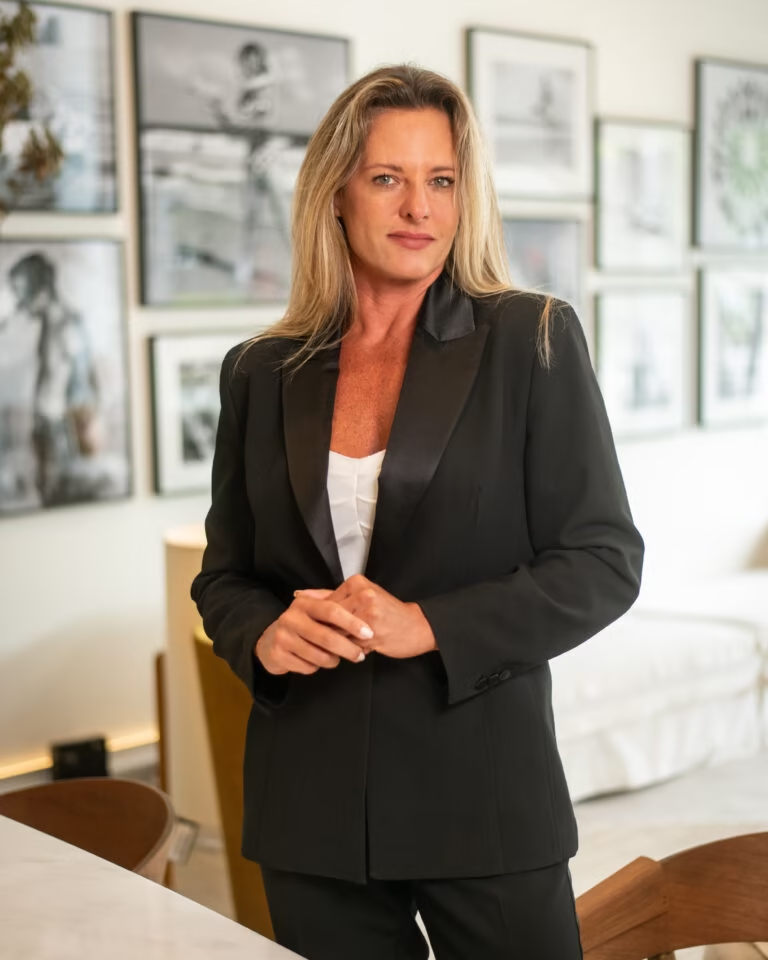
I am a specialist in luxury real estate, high-end properties, and real estate investments in Southern Brazil. Recognized for my premium and bilingual service, I accompany each client from the initial search to the delivery of the keys, connecting buyers and investors to the most exclusive developments on the island, from Jurerê Internacional to Campeche, passing through Cacupé, João Paulo, and Praia Brava. Founder of Luxury Home Floripa, I have accumulated over R$320 million in sales over five years of experience in the high-end real estate market. Here I share analyses of the luxury market in Florianópolis, high-end launches, appreciation trends, and everything a discerning buyer needs to know before making a significant asset decision. I also share insights and news about the lifestyle surrounding this universe: the nautical world, gastronomy, events, sports, and everything that connects Florianópolis to the world of high-end real estate.